
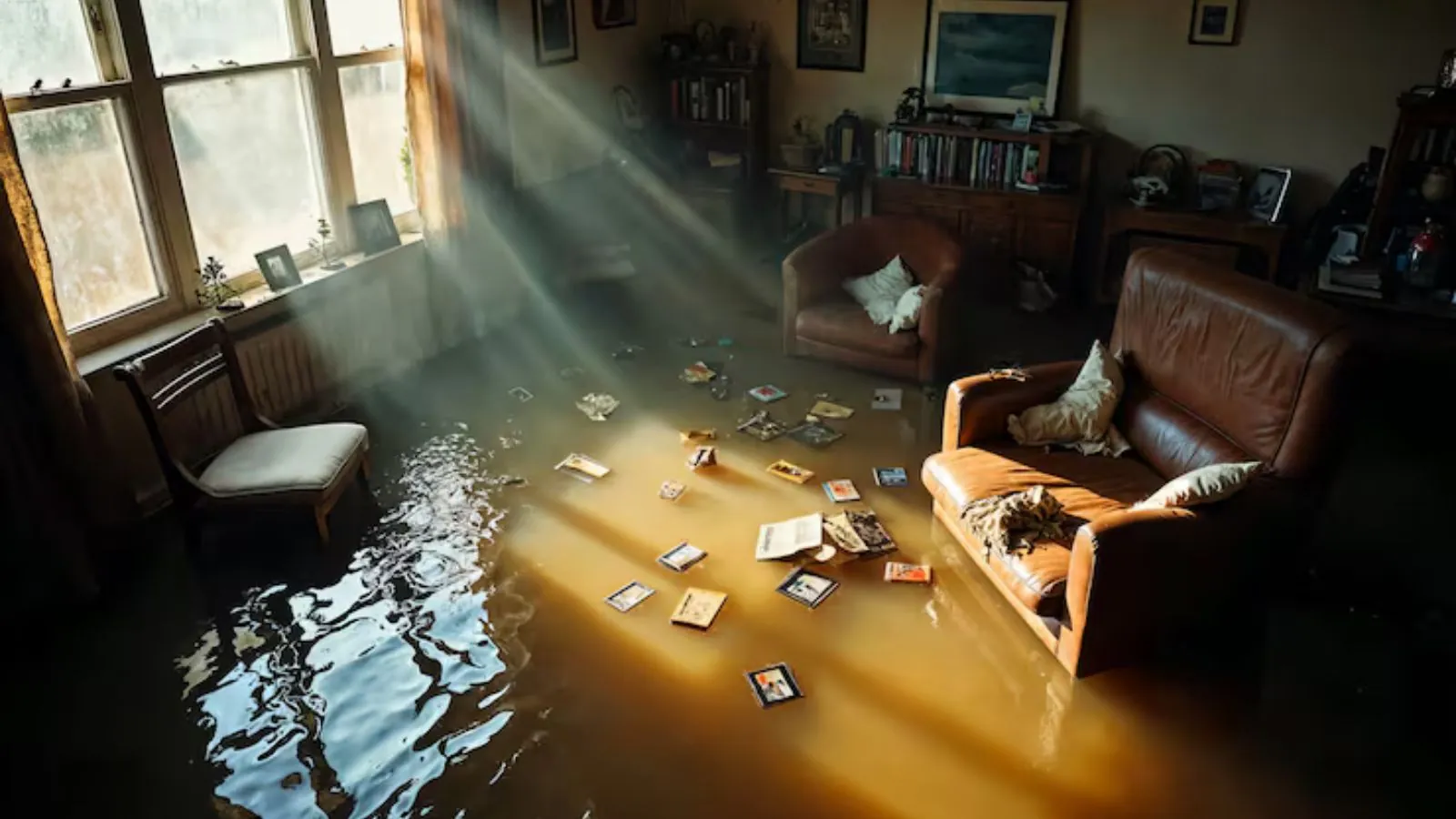
A water damage claim goes more smoothly when the evidence is collected in the first hour, not the third week. This guide covers the documentation side: what to capture, what to save and what the process usually looks like for a Cornelius, NC homeowner. It does not predict how any claim will be decided. That is between you and your insurer.
Step one: photograph before you touch
Before a single towel goes down, take pictures. Use your phone to record wide shots of each room, then close-ups of the damage. Capture the source if you can see it, such as a split hose or a stained ceiling.
Video works well for this. Walk through slowly and say what you are looking at. Include the water line on walls, wet furniture and anything floating. Once things are moved or dried, that evidence is gone.
Step two: stop the damage from growing
Policies generally expect owners to take reasonable steps to limit the loss. That means shutting off the water, moving belongings and getting the structure dried. Waiting for an adjuster while the floor stays wet can make things worse.
If there is standing water, water extraction is the first job. Keep any part that failed, such as a burst hose or a cracked fitting. An adjuster may want to see it.
Step three: report the claim
Call your agent or the insurer's claim line as soon as the home is safe. Have your policy number ready, and give a short, factual account: when you found it, where the water came from and what you have done so far.
Write down the claim number, the name of everyone you speak with and the date of each call. A simple notebook or a notes file on your phone is enough.
Ask two things on that first call. Find out whether the insurer wants to inspect before any materials are removed, and ask how they prefer to receive photos and receipts.
Claim timing in North Carolina
The North Carolina Department of Insurance says an insurance company should acknowledge receipt of your claim within 30 days. The same guidance says there is no specific time limit in which the company must settle the claim.
In practice, that means a clear paper trail helps you follow up. If you believe a claim is being handled unfairly, the Department of Insurance takes consumer questions. Its site also reminds owners that homeowners policies do not cover flood or rising water, which is a separate claim under a flood policy if you carry one.
Step four: build the file
Think of the claim as a folder that anyone could pick up and understand. These are the items that usually belong in it.
| Document | Why it helps |
|---|---|
| Dated photos and video | Show the damage before cleanup |
| Moisture map and daily readings | Show how far water went and that drying was needed |
| Itemized scope of work | Lists each task and material |
| Receipts | Support emergency costs, hotel stays and supplies |
| List of damaged belongings | Supports the contents part of the claim |
| The failed part | Shows the cause |
A restoration crew produces the middle rows as part of the work. Daily moisture logs are standard on a properly run drying job.
Step five: the adjuster visit
The adjuster inspects the damage and writes an estimate. It helps to be there. Walk them through what happened and hand over your photos and the drying records.
If materials had to be removed before the visit, the photos and the moisture readings stand in for them. That is common. Wet drywall and pad cannot always wait, and insurers generally understand that when it is documented.
Step six: compare scopes
The insurer's estimate and the contractor's scope should describe the same work. If they differ, look at the line items, not the totals. A missing room or a missed material is easier to resolve than a general disagreement.
Nobody can promise that a claim will be approved or how much will be paid. What a contractor can do is document accurately and explain the scope to you and to the adjuster.
Special cases around Lake Norman
A leak found in a second home after weeks away raises questions about timing. Document when the house was last checked and by whom. Large, custom homes in The Peninsula may have finishes that need specific line items, so describe materials precisely.
Attached homes involve an association. Ask who files for which part of the building. The same steps apply in Davidson, which follows the same state insurance rules. Damage to walls is commonly part of these files, and the wall and drywall repair page shows what that scope includes.
Questions people ask
How long does a water damage claim take in North Carolina?
It varies. The state Department of Insurance says the insurer should acknowledge your claim within 30 days and that there is no specific time limit for settlement. Good records help you follow up.
Do I need my own contractor estimate?
It is useful. An itemized scope from the company doing the work gives you something to compare with the adjuster's estimate.
Can I throw away ruined carpet before the adjuster comes?
Photograph it well first, and keep a small sample if you can. Ask your insurer before disposing of large items.
What if I find more damage after the claim is filed?
Report it. Hidden damage found during drying or demolition is common, and it should be documented with photos and readings.