
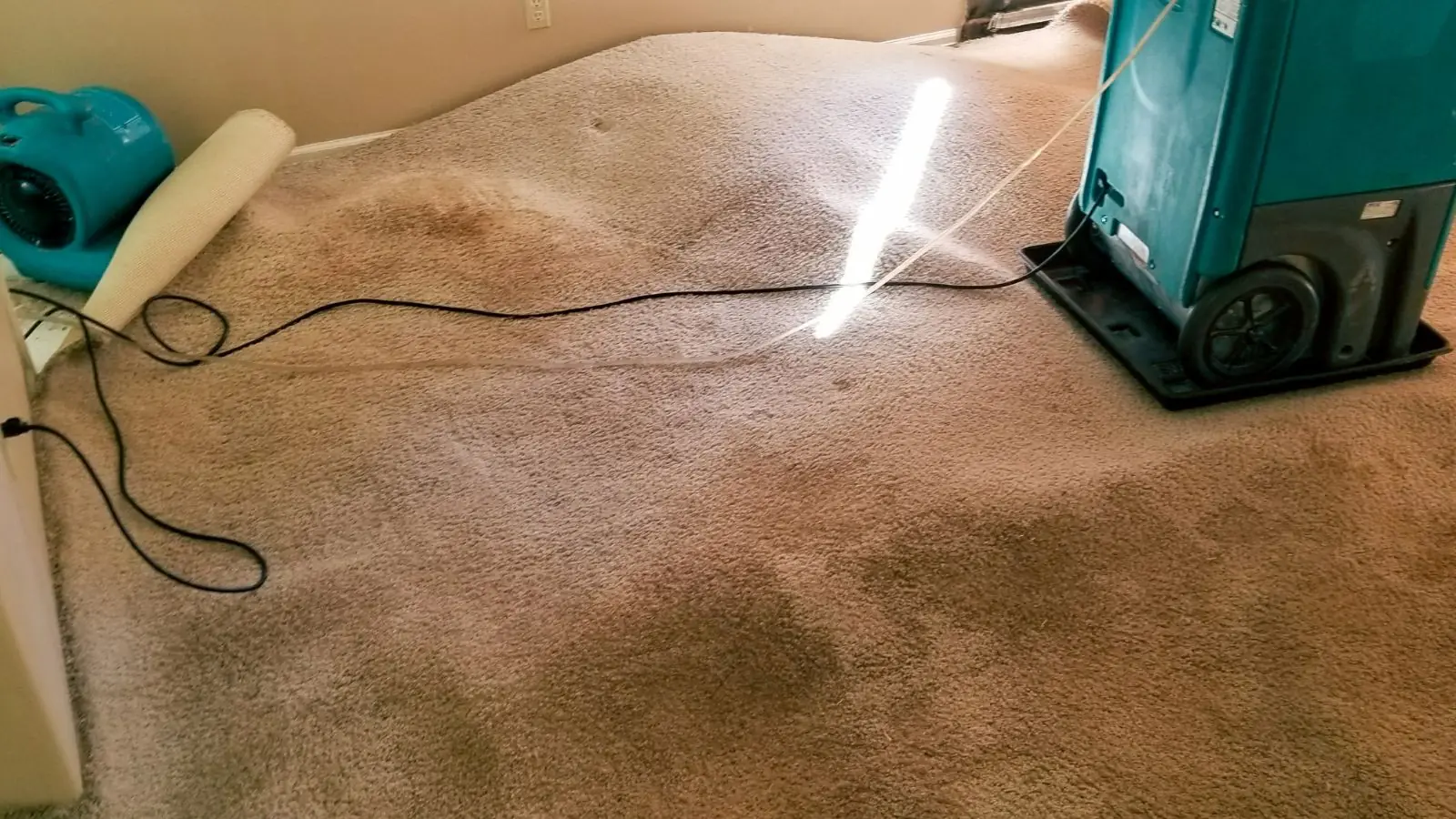
Structural drying and dehumidification is the controlled removal of moisture from a building's materials after the liquid water is gone. For a home in Cornelius, NC, it is the stage that decides whether walls and floors are saved or torn out. It runs for days, and it is measured the whole way.
The wall feels dry, so why does it still smell damp
This is the question people actually ask. The surface dried, the puddle is gone, but a room smells musty, paint is bubbling or a floor has begun to cup. Those are signs of moisture trapped inside materials, where towels and open windows cannot reach.
Drywall, wood and concrete hold water inside them. It leaves slowly unless the air around it is dry and moving. That is the job trade professionals call structural drying.
How drying works
Three things dry a building: airflow, low humidity and warmth. Air movers push dry air across wet surfaces so water evaporates. Dehumidifiers pull that water out of the air and send it down a drain. Without the second step, the moisture just moves to another room.
- MeasureA moisture meter and thermal camera map every wet material and set a dry target.
- Place equipmentAir movers and LGR dehumidifiers are sized to the room and the materials.
- Monitor dailyReadings are logged each day and equipment is moved as areas dry.
- ConfirmEquipment comes out when readings match dry reference materials.
The method follows ANSI/IICRC S500, the published standard for water damage restoration. You can ask any company whether its crews work to it.
What the equipment is
| Equipment | What it does |
|---|---|
| Air mover | Moves a fast sheet of air across floors and walls to speed evaporation |
| LGR dehumidifier | Removes water vapor from the air, even when the air is already fairly dry |
| Moisture meter | Reads the moisture content inside drywall and wood |
| Thermal camera | Shows cooler, wet areas behind surfaces |
| Wall cavity system | Pushes air into wall or cabinet voids through small holes |
Water mitigation and how drying fits in
Water mitigation is the name for everything done to stop damage from getting worse. It covers shutting off the source, extracting standing water, removing materials that cannot be saved and drying the rest. Drying is the longest part of mitigation.
Repairs come after mitigation, not during it. New drywall or flooring installed over damp framing will fail, so the drying log is what clears the way for the rebuild.
How long drying takes
Most jobs take three to five days. The range depends on the material. Carpet and drywall dry quickly. Hardwood, plaster and concrete take longer, and a wet crawl space or slab can need a week or more.
The local air plays a part. Cornelius summers are humid, and outdoor air beside Lake Norman is often wetter than the air inside a drying chamber. That is why windows stay closed while equipment runs. The machines are loud and warm, but turning them off at night adds days.
Materials that need special handling
Wood floors are dried slowly on purpose, as explained on the hardwood floor water damage repair page. Walls may need baseboards removed and small holes drilled, covered under wall and drywall water damage repair. Space under the house is its own case on the crawl space water damage page.
Cost factors and insurance
When a water loss is covered, drying is normally part of the claim, and the daily log supports it. Check your policy or ask your insurer. Drying is available across ZIP code 28031 and for homes in Davidson. Call (833) 521-1033 for a moisture survey. The equipment plan and its price are explained before the first machine is plugged in.
Questions people ask
Why does my wall still smell musty when it feels dry?
Because the inside of the wall may still be wet. Drywall dries on the surface first, while insulation and framing behind it hold moisture. A meter reading will show it.
Can I rent air movers and dehumidifiers from you?
No. The equipment is used on jobs the crew runs and monitors. It is not rented out.
Can I turn the machines off at night?
It is better not to. Drying is continuous, and every pause lengthens the job. Ask the crew about moving a unit away from a bedroom.
Is drying an emergency service?
The first response is, and the 24/7 line covers it. Once equipment is set, the daily checks are scheduled visits.