
Finding a water stain raises one question before all others: is this happening now, or did it happen long ago? The answer changes everything, from how urgent the repair is to how an insurer sees it. This guide shows Cornelius, NC homeowners how to read the signs, and where a moisture meter removes the guesswork.
The touch test
Start by pressing gently on the stained area. New water damage usually feels firm but damp or cool. The material is wet, though it has not had time to break down.
Old damage feels different. Drywall that has been wet repeatedly turns soft, crumbly or spongy. Wood that has been wet for a long time may be soft enough to dent with a fingernail.
A stain that is hard and completely dry may be from a leak that was fixed years ago. That is the easiest case.
Count the rings
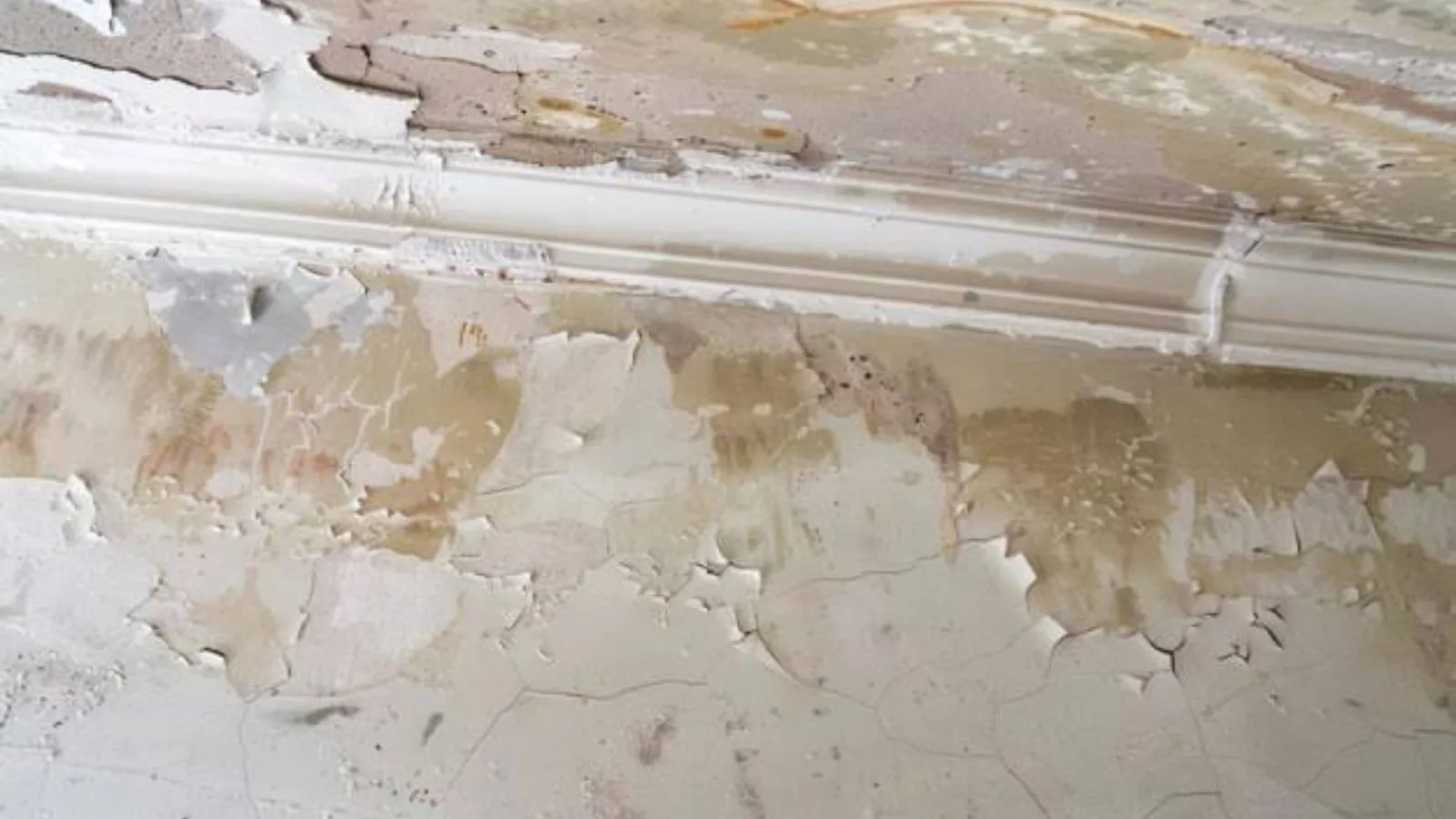
Water stains dry from the outside in and leave a line at the edge. One leak that dried leaves a single outline.
A leak that comes and goes leaves rings, like the rings of a tree. Each wetting spreads to a slightly different edge. Several rings mean the area has been wet many times, which points to an intermittent source such as a roof leak that only drips in heavy rain.
Look at the color and the material
| Sign | Suggests new | Suggests old |
|---|---|---|
| Color | Light or no stain yet, darker when wet | Yellow, brown or dark edges |
| Rings | None or one | Several |
| Texture | Firm, damp | Soft, crumbly, flaking |
| Paint | Slight bubbling | Peeling, cracking, chalky |
| Smell | Little or none | Musty |
| Surrounding material | Sound | Warped, swollen or rotted |
| Mold or dark spotting | Unlikely | More likely |
No single sign is proof. Look at them together.
Consider the material
Some materials show damage quickly and others hide it. Thin drywall stains within hours. Thick plaster and tile can hold water behind them for months before anything shows.
So a new-looking stain on plaster or tile may have a long history behind it. In older houses with plaster walls, such as many in Davidson, be slower to assume a leak is recent.
The moisture meter settles "is it wet now"
Visual signs tell you about the past. A moisture meter tells you about the present. It reads the moisture inside the material and compares it with a dry area.
If the stain reads dry, the leak is not active, at least not today. If it reads wet, water is present now. Checking again after rain or after running the shower above tells you whether the source is weather or plumbing.
Dating damage in Cornelius homes
Cornelius was incorporated in 1905 and Lake Norman was created in 1963, so the town has houses from many decades side by side. A stain in an older home may trace back to work done years ago. Mecklenburg County issues building permits for Cornelius, so the county's permit history for an address can show when a roof, plumbing or repair job was permitted.
Weather-related stains can be checked against your own notes of heavy storms. For official storm records, use the National Weather Service. This guide does not list storm dates.
Humid summers near the lake also matter. Condensation from air conditioning can create a seasonal stain that returns every July. If a ceiling mark under the attic unit grows in summer and stops in fall, look at the condensate drain.
Why the age matters for insurance
Insurers draw a line between sudden damage and gradual damage. Sudden and accidental losses are often covered. Long-term leaks often are not.
Signs of age, such as multiple rings, rot and mold, suggest the damage was gradual. An adjuster will look for exactly those. You cannot change what the evidence shows, but you should know how it may be read. Ask your insurer how your policy treats it.
Why it matters when buying or selling
A buyer who sees a stain wants to know if the leak was fixed. A seller who can show a dry reading and repair records is in a stronger position than one with fresh paint over a ring.
If you are looking at a house, ask what caused any stain and when. In large homes with many bathrooms and attic air handlers, such as those in The Peninsula, there are more possible sources to rule out.
Common sources by location
- Ceiling under a bathroom: a toilet seal, tub drain or supply line
- Ceiling under the attic: the roof or the air conditioner
- Wall under a window: the window or siding
- Baseboard near a kitchen or bath: plumbing in the wall
- Floor near an appliance: a slow line leak
Ceiling stains and their causes are covered on the ceiling water damage repair page. A seasonal stain under the attic unit is covered on the AC leak water damage page.
What to do next
If the area is wet now, find and stop the source, then dry it. If it is dry and firm, you can repair and repaint after confirming the cause was fixed.
If it is dry but soft or crumbling, the material needs to be replaced even though the leak is over. The wall and drywall water damage repair page explains how damaged sections are cut out and rebuilt.
Do not paint over any stain until you know which of these you have.
Questions people ask
My Cornelius ceiling stain only appears in summer. Is it old or new?
It is probably a recurring leak. A stain that returns each summer under an attic air handler often comes from the condensate drain, so have the HVAC system checked.
Can a professional tell exactly how old water damage is?
Not exactly. They can usually tell whether it is recent, repeated or long-standing, based on the material and the readings.
Does a dry stain mean the problem is fixed?
Not always. It may be an intermittent leak that is dry today. Check again after rain or after using the plumbing above.
Should I open the wall to check?
Start with a moisture meter. It often answers the question without cutting.